Pallet Racking Safety in Victoria: Compliance, Auditing, and AS 4084 Standards Explained
1. The Governing Framework: AS 4084 & WorkSafe Victoria
Pallet racking installations across Australia are governed by the revised standard AS 4084:2023 (Steel Storage Racking), which is split into two distinct parts:
- AS 4084.1:2023 (Design): Covers structural engineering calculations, steel tolerances, and manufacturing specifications for cold-formed steel racking components.
- AS 4084.2:2023 (Operation and Maintenance): Specifies operational tolerances, site damage limits, inspection frequency, load signage standards, and repair protocols.
WorkSafe Victoria’s Pallet Racking Safety Guidance requires duty holders, including warehouse managers, employers, and landlords, to maintain racking in a structurally sound condition. Operating damaged racking exposes businesses to heavy statutory fines, immediate WorkSafe Prohibition Notices, and severe liability in the event of structural collapse.
2. The Traffic Light Risk Classification (AS 4084.2)
Under AS 4084.2, structural damage to racking uprights, diagonal bracing, and horizontal beams is assessed against a standardised straight-edge measurement and categorised into three risk levels:
| Risk Classification | Condition & Required Operational Action |
|---|---|
| GREEN LEVEL (Within Limit) |
Operational. Damage is within tolerable limits. Monitor during standard monthly visual site inspections. |
| AMBER LEVEL (Action Required) |
Hazardous. Damage exceeds allowable tolerances. Bay must be offloaded within 4 weeks and cannot be reloaded until certified replacement components are fitted. |
| RED LEVEL (Immediate Hazard) |
Critical Danger. Immediate structural compromise. Bay and adjacent bays must be offloaded immediately and locked out from operation until fully repaired. |
Allowable Damage Tolerances:
- Upright Bends (Down-Aisle): A deflection exceeding 3.0mm over a 1-metre gauge length triggers an Amber or Red notification.
- Upright Bends (Cross-Aisle): A deflection exceeding 5.0mm in the cross-aisle direction requires immediate intervention.
- Bracing Members: Any diagonal or horizontal bracing bar with a bend exceeding 10.0mm across its length requires replacement.
Important Engineering Rule: Straightening or welding damaged cold-formed steel uprights on site is strictly prohibited under Australian Standards. Damaged structural components must be removed and replaced with certified manufacturer parts.
3. Safe Working Load (SWL) Data Plaques & Beam Alterations
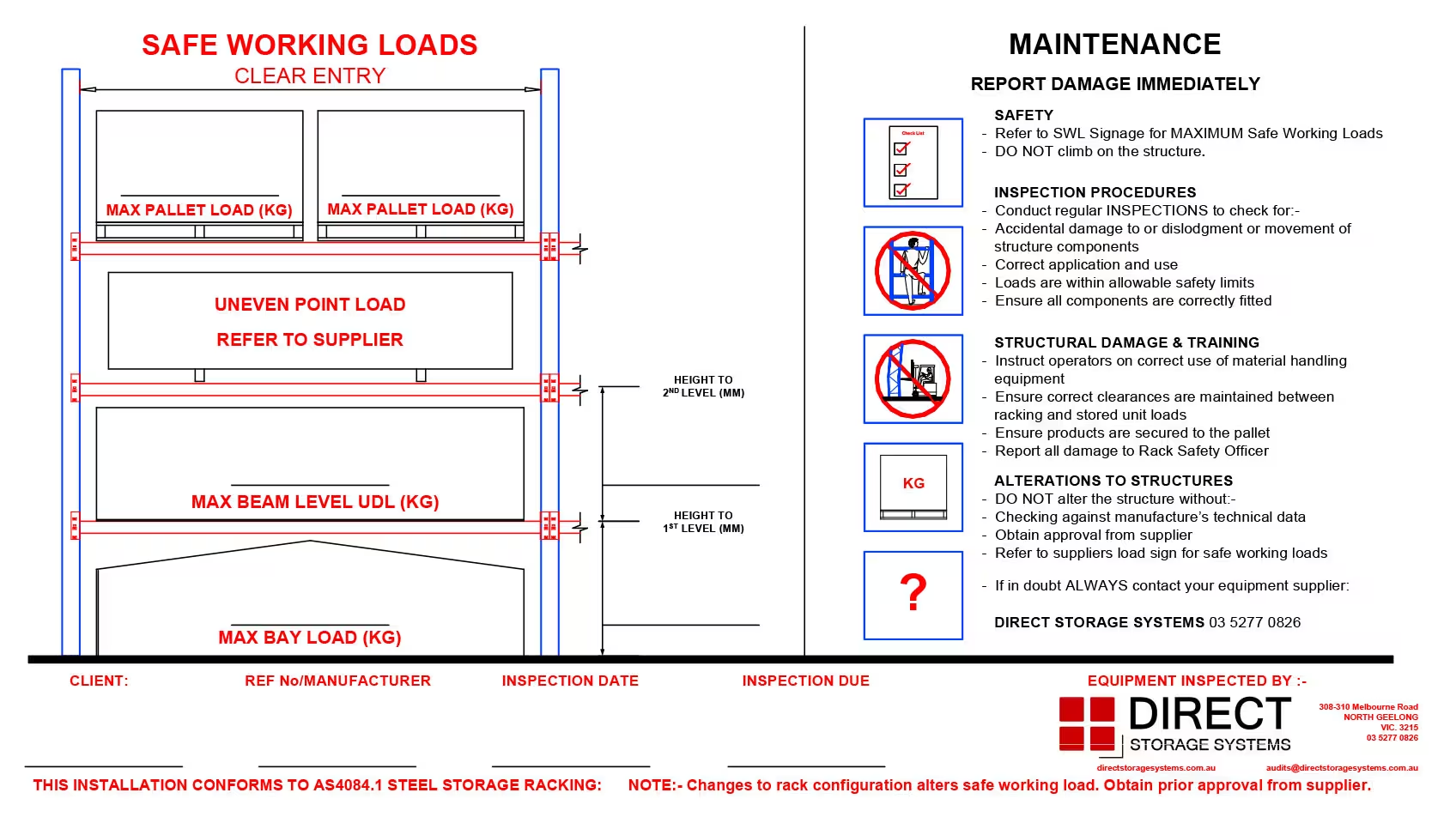
Every pallet racking run must feature a certified, clearly visible Safe Working Load (SWL) Plaque securely fastened to the face of the end frame.
Under AS 4084.2:2023, SWL plaques must explicitly detail:
- Maximum unit load per pallet level (e.g. 2000kg UDL per beam pair).
- Maximum total load capacity per bay (e.g. 8000kg bay capacity).
- Original installation date, design profile, and system manufacturer.
- Permissible first beam level height and maximum clear span heights.
Why You Should Never Move Beams Without Recertification
Raising your lowest beam level to fit taller pallet inventory increases the unsupported length of the vertical upright. This alters the slenderness ratio of the frame, reducing the total load-bearing capacity of the entire racking run. Any alteration to beam positions invalidates the original engineering certification until a qualified engineer or inspector recalculates and updates the SWL signage.
4. Mandatory Annual Safety Inspections
Australian Standards require that all steel storage racking systems undergo a comprehensive formal inspection by a qualified, competent inspector at least once every 12 months.
What an AS 4084 Annual Audit Examines:
- Vertical Plumb: Measuring frame uprights to ensure they have not shifted out of vertical alignment beyond the 1:350 plumb tolerance.
- Floor Anchors & Baseplates: Checking that all concrete expansion or screw anchors remain fully torqued and that baseplates are free from stress fractures or concrete spalling.
- Beam Connectors & Safety Locking Pins: Verifying that 100% of beam end connectors have intact steel locking pins fitted to prevent accidental dislodgement from upward forklift tine strikes.
- Structural Member Integrity: Documenting any twisted, torn, or crushed profiles in accordance with the Green, Amber, and Red framework.
- Pallet Overhang & Loading Practice: Ensuring pallets sit squarely across beams with the required front and rear safety overhangs (typically 50mm).
Following the inspection, the facility must be provided with a formal compliance report, a register of damaged components, and an actionable remediation plan.
5. Preventative Safety Hardware to Minimise Downtime
Repairing unloaded racking bays disrupts warehouse fulfilment. Installing heavy-duty physical protection guards at critical impact points significantly reduces structural wear:
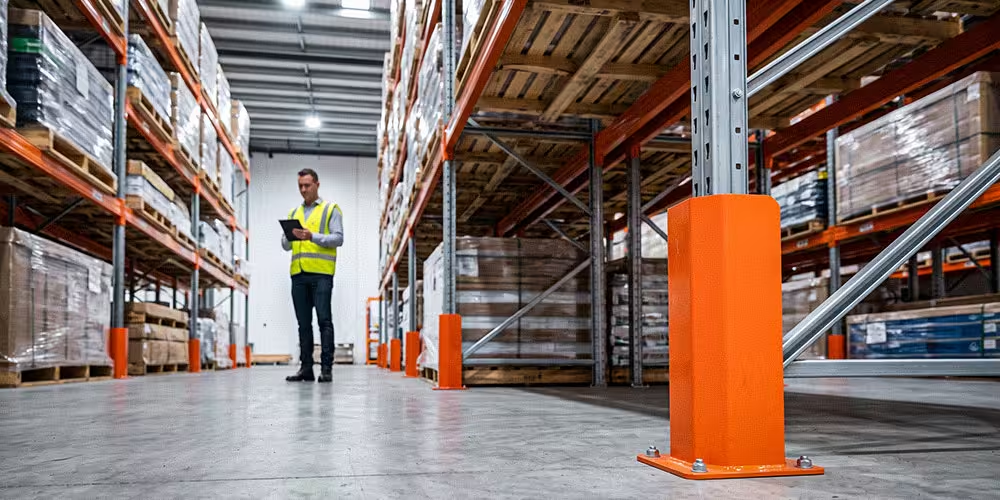
- Heavy-Duty Steel Column Protectors: Bolted into the concrete floor independent of the upright, wrap-around post guards absorb direct impact from forklift tines and wheels.
- Rack End Barrier Systems: High-visibility structural steel barriers installed at the end of every racking aisle protect vulnerable corner frames from turning radius collisions.
- Rear Pallet Backstop Beams: Horizontal safety rails fitted to double-entry runs or perimeter walls to prevent pallets from pushing through into adjacent working spaces.
- Mesh Anti-Spill Decking & Cladding: Heavy-gauge steel wire mesh decks that drop over beam steps to support broken timber pallets and prevent falling cartons into pedestrian walkways.
Related Products