Selective vs. Drive-In Pallet Racking: Choosing the Right System for Your Warehouse
1. Understanding the Core Differences
The primary distinction between Selective and Drive-In racking lies in the balance between direct stock accessibility and storage density.
| Feature | Selective Pallet Racking | Drive-In Pallet Racking |
|---|---|---|
| Pallet Accessibility | 100 percent immediate access to every pallet bay | Restricted to the front pallet in each lane |
| Stock Rotation Model | First-In, First-Out (FIFO) | Last-In, First-Out (LIFO) |
| Storage Density | Standard density (requires aisles between every run) | High density (increases capacity by up to 75 percent) |
| SKU Suitability | High SKU diversity with low to medium pallet counts per SKU | Low SKU diversity with high volume per SKU |
| Forklift Aisle Needs | Requires dedicated working aisles (typically 3.0m to 3.5m) | Forklifts enter directly into structural storage lanes |
| Forklift Compatibility | Standard counterbalance and reach trucks | Specialised narrow-chassis reach or counterbalance trucks |
2. Selective Pallet Racking: Maximum Flexibility & Direct Access
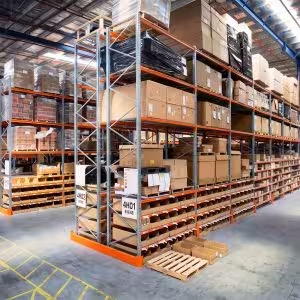
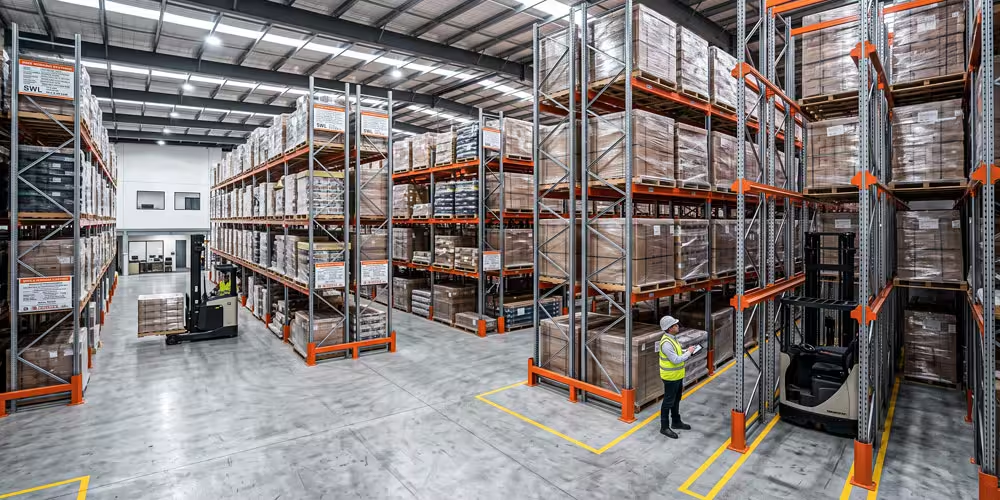
Selective pallet racking is the most widely used industrial storage system in Australia. In this setup, single or back-to-back runs of racking are separated by working aisles, allowing forklift operators direct, unimpeded access to every single pallet location at all times.
Operational Strengths:
- 100 Percent Pallet Selectivity: Any pallet can be loaded or retrieved immediately without moving surrounding stock, making it ideal for rapid order fulfilment.
- True FIFO Inventory Flow: Supports genuine First-In, First-Out stock rotation, which is vital for businesses handling perishable food, pharmaceuticals, or dated retail stock.
- Standard Handling Equipment: Compatible with almost all standard commercial counterbalance forklifts, reach trucks, and electric stackers.
- Ease of Reconfiguration: Under AS 4084 design principles, beam heights can be adjusted to accommodate shifting pallet dimensions, provided safe working load updates are verified.
The Operational Trade-Off:
Because every row requires a dedicated operating aisle for the forklift, only 35 to 40 percent of total warehouse floor area is dedicated to actual storage. The remainder serves as transit space, which may not be cost-effective if your facility handles high volumes of identical product lines.
3. Drive-In Pallet Racking: Maximum Cubic Density
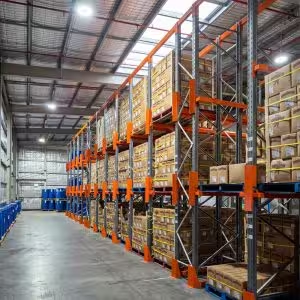
Drive-In racking is a high-density, multi-level storage system that eliminates individual operational aisles. Instead, forklifts drive directly into deep structural lanes where pallets rest on continuous, heavy-duty cantilevered side rails supported by reinforced upright frames.
Operational Strengths:
- Massive Footprint Efficiency: Can increase cubic storage capacity by 60 to 75 percent compared to standard selective layouts within the exact same building footprint.
- Reduced Aisle Wastage: Eliminates dead aisle space, concentrating pallets into solid blocks that use both the full depth and height of the warehouse.
- Ideal for Cold Storage: Widely used in refrigerated warehouses and freezers where the high cost of energy demands maximum pallet density per cubic metre.
- Bulk Inventory Consolidation: Exceptional for batch manufacturing, seasonal goods, and large distribution contracts with uniform pallet sizes.
The Operational Trade-Off:
Drive-In racking operates on a Last-In, First-Out (LIFO) rotation model. Pallets placed first into the back of a lane cannot be accessed until all pallets in front of them are removed. This setup can result in honeycomb loss, where lanes remain partially filled while waiting for batch clearance.
4. How to Choose the Best System for Your Facility
Before investing in new storage infrastructure, evaluate these four operational criteria:
- Analyse Your SKU Profile: If your warehouse manages 200 distinct product lines with only 3 to 4 pallets per line, Selective racking is essential to prevent inventory logjams. If you store 1,000 pallets split across only 10 unique product lines, Drive-In racking will dramatically reduce your required warehouse footprint.
- Review Stock Perishability: If your products carry strict expiry dates or batch manufacturing deadlines, Selective racking ensures continuous FIFO stock rotation.
- Audit Your Materials Handling Fleet: Drive-In systems require forklifts that can physically enter the clear width between lane rails. The overall chassis width, overhead guard width, and mast profile of your forklift fleet must be matched precisely to the lane clear spans during the engineering phase.
- Evaluate Impact Risk: Because forklifts operate inside the racking structure in Drive-In setups, the likelihood of structural contact is higher. Floor guide rails and robust lead-in post protectors are critical additions to maintain safety standards.
5. Engineering and AS 4084 Compliance Considerations
Whether you choose Selective or Drive-In racking, both configurations must comply with the design, installation, and maintenance requirements set out in AS 4084.1:2023 and AS 4084.2:2023.
Compliance Reminder: Drive-In racking configurations feature higher internal structural loads and require specialised top-tie bracing, spine bracing, and heavy-duty floor anchoring to resist dynamic forklift forces. All systems must be fitted with certified Safe Working Load (SWL) signage and undergo mandatory 12-month compliance audits.
Key safety accessories required across both systems include:
- Certified Safe Working Load Plaques: Displayed clearly at all system entry points, outlining maximum load capacities per rail, beam, and bay.
- Heavy-Duty Column Protectors: Bolted independent of the uprights to shield frames from direct forklift impact.
- Floor-Mounted Guide Rails: Low-profile steel angles installed within Drive-In lanes to keep forklifts centralised and prevent wheel impact on uprights.
Related Products